

Aberdeen’s Commercial Property Market: Confidence Returning, With Eyes Wide Open
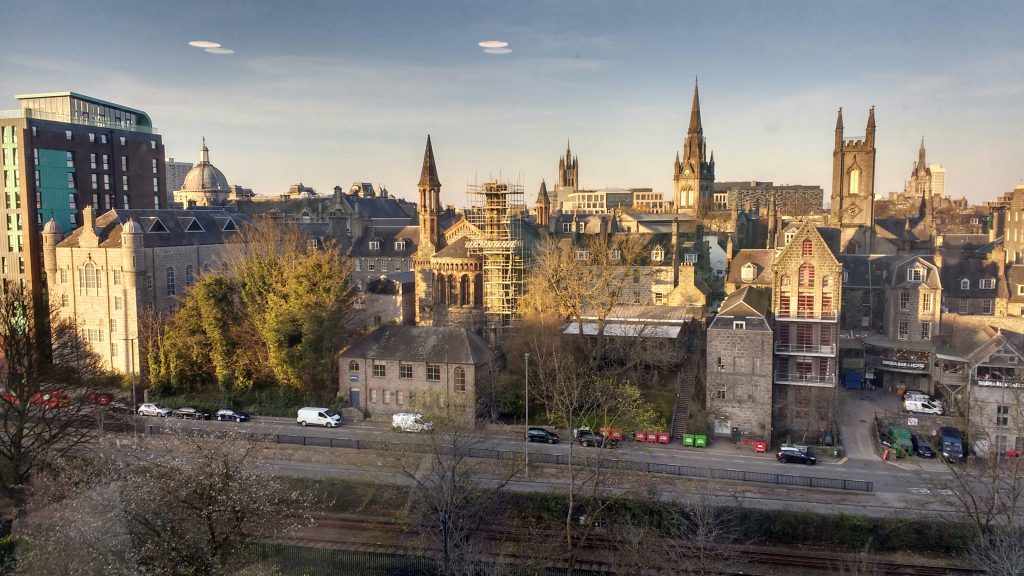
Photo by Polka w UK on Unsplash
Aberdeen’s commercial property market isn’t shouting about its recovery, but signs of renewed confidence are showing.
Recent transaction data shows the “Granite City” accounting for a larger share of Scottish commercial property deals than at any point so far this decade. Rather than signalling a sudden boom, this points to a market that has recalibrated.
A Market That’s Found Its Level
Over the past few years, Aberdeen has gone through a period of adjustment. Shifts in the energy sector for a city that was so dependent on the energy sector, evolving office requirements and wider economic uncertainty all weighed on activity.
However with property values stabilizing, transactions that previously stalled are beginning to move across offices, industrial units and specialist commercial space, particularly where assets offer stable income or clear scope for repositioning.
Demand Is No Longer One-Dimensional
Aberdeen’s commercial property market is becoming more diverse than it once was.
Industrial and logistics space continues to attract interest, supported by engineering firms, supply-chain operators, and businesses servicing both traditional and renewable energy sectors. Locations such as Dyce and Bridge of Don remain popular due to strong transport links and established business communities.
Across the whole of the UK office demand is more selective, with occupiers prioritising efficient, well-specified buildings that suit modern working patterns rather than large, legacy floorplates.
Alongside this, hybrid and specialist accommodation, is seeing steady demand from subsea, engineering and energy-transition occupiers.
Energy Transition as a Long-Term Occupier Driver
Energy remains central to Aberdeen’s economy, but its role has shifted toward renewable.
Alongside oil and gas, the city is now a base for offshore wind, hydrogen, carbon capture, decommissioning, and low-carbon engineering. These sectors require physical space — offices, workshops, yards, and flexible technical accommodation — underpinning long-term occupier demand in the commercial property market.
Balancing Property Momentum with a Slower Economic Outlook
It’s important to view Aberdeen’s recent uptick in commercial property activity in context.
Despite positive signs in deal flow and occupier demand, wider economic forecasts from 2025 suggest that Aberdeen is likely to experience slower overall growth than many other UK cities through the latter part of the decade. These projections reflect long-term structural challenges, including workforce dynamics and the ongoing transition within the energy sector.
Rather than contradicting the property story, this helps explain it.
Markets with modest growth expectations often see activity driven by pricing resets, income security, and repositioning opportunities, rather than speculative development.
Relative Value Still Sets Aberdeen Apart
Compared with Edinburgh or Glasgow, Aberdeen continues to offer strong relative value.
With pricing reset, demand diversified, and long-term industries underpinning occupier needs — even against a backdrop of modest economic growth forecasts, Aberdeen is quietly re-establishing itself as a credible option for investors and occupiers alike.
Search for available commercial property in Aberdeen on NovaLoca.

Leave a Comment