

2025 Office Market Review: supply pressure and pricing power across Surrey and Hampshire

2025 Office Market Review: supply pressure and pricing power across Surrey and Hampshire By Piers Leigh, Curchod & Co
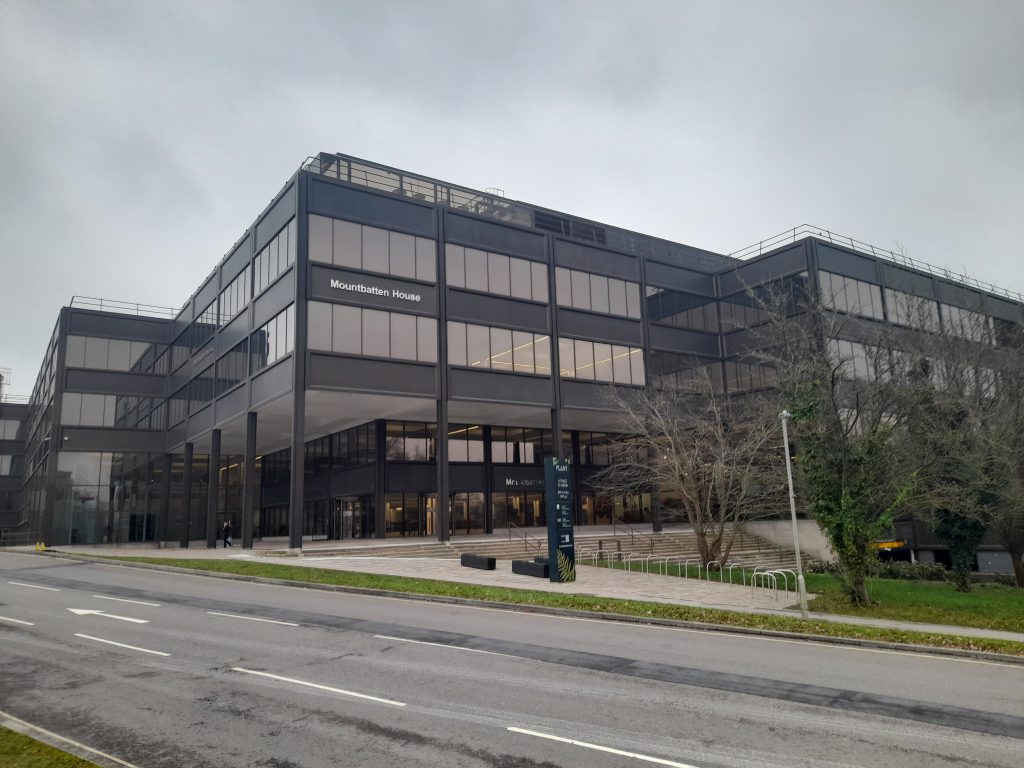
There is a familiar pattern to many of the conversations I have had with office occupiers over the past year. Businesses want to move. They want better quality space, stronger amenities and locations that help draw people back together more regularly. The issue, more often than not, is not affordability or intent. It is availability.
That dynamic has come to define the office market across Surrey and Hampshire in 2025. Headline take-up figures can look muted at first glance, but they risk masking the more important reality. This is not a market lacking demand. It is a market increasingly constrained by a shortage of Grade A and genuinely prime accommodation in the places occupiers want to be.
This is not a market defined by retreat. It is one shaped by scarcity.
The numbers matter, but context matters more
Across Guildford, Woking and Weybridge, total office take-up in 2025 reached 234,503 sq ft, excluding Lidl’s acquisition of Quadrant Court for redevelopment. That figure is only marginally lower than 2024, despite there being no significant new office stock delivered during the year.
Elsewhere, the picture diverges. The Blackwater Valley recorded a strong rebound, with take-up rising 51 percent year-on-year to 133,266 sq ft. Basingstoke, by contrast, saw just 61,680 sq ft of take-up, more than 25 percent down on the previous year.
Read without context, these figures might suggest uneven or weakening markets. In reality, they reflect how closely activity is now tied to the availability of the right type of space. Where good-quality accommodation exists, it is letting. Where it does not, movement slows, even when demand remains.
A supply issue hiding in plain sight
The most acute pressure is in Surrey’s town centres. Across Guildford, Woking and Weybridge, Grade A availability has fallen below 3 percent. That is a critical threshold.
This shortage is not accidental. Over recent years, a steady stream of office buildings has been lost to residential conversion, often in precisely the most accessible, amenity-rich locations. At the same time, speculative development has remained limited. Build costs increased sharply, funding became more selective and, without pre-lets, many schemes simply did not proceed.
The result is a constrained market. Occupiers looking for central, modern space face limited choice. Some compromise on quality. Others relocate out of town or choose to remain where they are. All of these responses suppress headline take-up, while pushing rents higher in the best remaining buildings.
Only one significant refurbishment is due to deliver new accommodation this year, at 31 Chertsey Road in Guildford, where 32,000 sq ft will complete following a £20 million investment. Beyond that, the development pipeline remains thin.
Polarisation becomes tangible
Basingstoke illustrates the market’s growing divide particularly clearly. On the surface, low take-up suggests limited occupier appetite. Look closer and the picture changes.
More than 71 percent of the town’s 2025 take-up was concentrated in its only Super Prime building, The Plant. Three deals there achieved rents of £38.00 per sq ft, setting a new benchmark. Elsewhere in the town, rents struggled to reach £20.00 per sq ft, even in buildings due for residential conversion.
This is no longer a marginal gap. It is a structural one. Super Prime offices now operate in a distinct tier, with different occupiers, expectations and pricing dynamics. For investors, this presents a challenge. Secondary rents often do not justify the level of capital expenditure required to compete, limiting refurbishment activity and reinforcing the shortage of high-quality space.
Basingstoke may be an extreme example, but similar patterns are emerging across other regional centres. In this context, average rents become a blunt tool. Quality matters more than ever.
Blackwater Valley. Balance makes the difference
The Blackwater Valley presents a more balanced picture. Take-up of 133,266 sq ft in 2025 marked a return to levels consistent with the five-year average.
The largest transactions included Leaders taking 35,000 sq ft at Building 1, The Meadows, and over 30,000 sq ft being let at Cody Technology Park, reflecting the importance of the aviation, defence and technology sectors within the local market.
Farnborough and Camberley have benefited from this clustering effect, supported by the availability of good-quality accommodation capable of attracting occupiers from outside the immediate area. Importantly, around two thirds of all transactions were under 10,000 sq ft, highlighting the depth of demand among smaller and mid-sized businesses.
The key distinction here is supply. Where markets retain a reasonable range of good-quality options, they are better able to accommodate growth-driven demand.
Flexibility as a defining feature
One of the clearest shifts in occupier behaviour has been the strength of demand for smaller, fitted space. Accommodation below 5,000 sq ft, delivered as Cat A+, continues to perform strongly.
This reflects more than convenience. Hybrid working, economic uncertainty and rapid technological change have increased the value placed on flexibility. Occupiers want space they can occupy quickly, adapt easily and exit without undue friction.
For landlords, Cat A+ has evolved from a trend into a strategy. Premiums of 30 to 50 percent over traditional Cat A space are increasingly achievable, often alongside shorter void periods. In many cases, this approach has proved more resilient than waiting for a single larger letting.
Looking ahead
As we move into 2026, there are early signs of cautious optimism. Build costs have begun to stabilise. Investor sentiment towards offices, while selective, is improving. Crucially, occupiers have shown through schemes such as Bottleworks in Guildford and The Plant in Basingstoke that they are willing to pay a premium for genuinely high-quality, adaptable space.
This creates a potential, if narrow, opportunity for developers and investors able to deliver Prime and Super Prime accommodation in the right locations. The risks remain real, but the underlying demand for well-designed, well-located offices has not disappeared.
The lesson from 2025 is a simple one. Muted take-up does not necessarily signal weak demand. In many cases, it reflects a lack of suitable supply. In markets defined by scarcity rather than surplus, pricing power increasingly sits with quality.
That reality is reshaping office markets across Surrey and Hampshire, and it is likely to remain a defining feature of the cycle ahead.
You can see all of the commercial property available from Curchod & Co on NovaLoca here.

Leave a Comment