

JLL: A New Front Line: Inside Swindon’s Growing Defence Sector

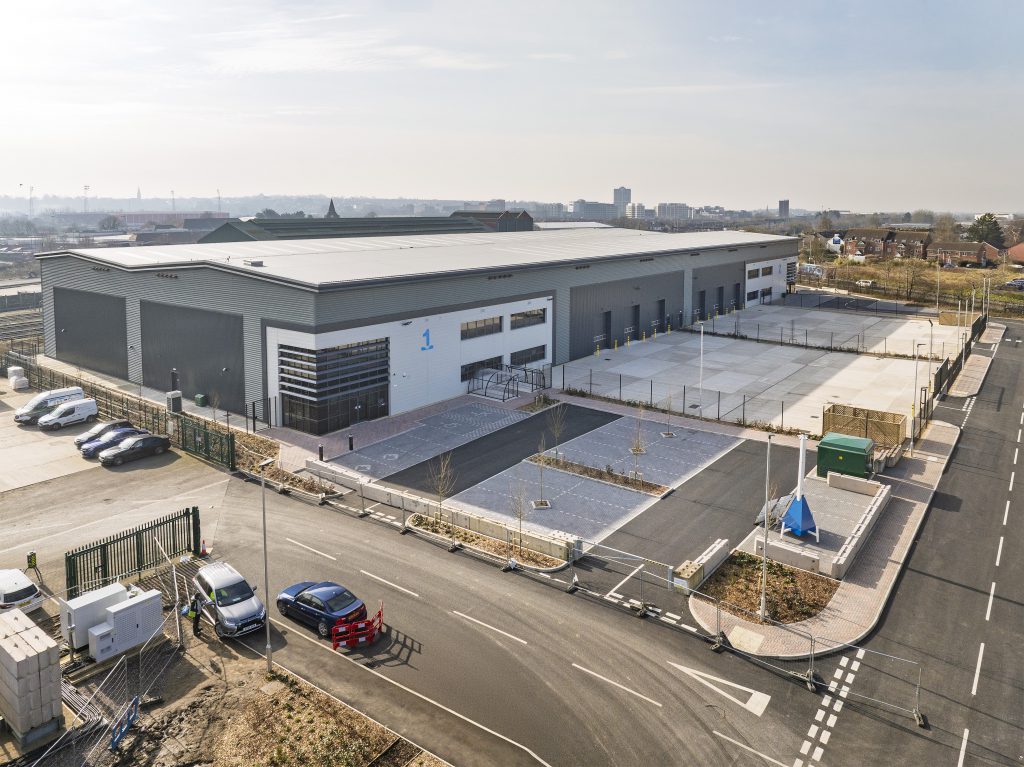
Unit 1 Swindon Urban Logistics Park – Cubex’s final remaining unit
Article by Sophie Parsons, Senior Surveyor, Industrial & Logistics at JLL
In 2019 devastating news hit Swindon – the 370 acre Honda factory, the town’s largest employer, was to be closed. In 2021 the last car rolled off the production line, leaving over 3,000 staff without a job, and making many to wonder what Swindon’s future held.
Few would have predicted that just 5 years later Swindon would be dubbed to be the UK’s new defence hub, with high-tech occupiers flocking to the town to get in on the action.
This involvement in the defence sector is not new for Swindon, having once been a key centre for Spitfire production in WW2. The very site which operated as a ‘shadow factory’ during the war then became the Honda factory and has now gone full circle, becoming the Panattoni Park development which forms the heart of Swindon’s defence boom.
This rise in defence activity comes off the back of the UK government’s commitment to significantly increase investment in defence activities with a landmark £15 billion of additional funding being committed to ‘transform’ the Armed Services and ensure they are ‘equipped to fight the wars of today’. By 2029 defence funding will reach a whopping £80bn a year, equivalent to 2.7% of GDP – the highest it has been in the last 30 years.
When you look more closely at this commitment within the Defence Industrial Strategy, a key theme appears: the focus on uncrewed aerial systems, or as they are colloquially referred to – drones. It has been this sector at the heart of Swindon’s rebrand, with the murmurings that Swindon could become a new defence hub beginning in 2025 when the Portuguese drone company Tekever committed to taking 254,000 sq ft at the Grade II listed warehouse, Spectrum. This was closely followed by SKD taking a building becoming the second drone company to settle in the town in a 6 month period.
But it was the MOD’s decision to take 545,000 sq ft at Panattoni Park, Swindon which has truly launched Swindon as the UK’s new defence hub. The property, Unit S545, comprises a new build cross docked facility with 21m eaves height and ESG credentials including BREEAM Outstanding and EPC A. The building has been acquired on a 15 year lease by the MOD for use as a new ‘DroneTEX’ centre and will become the largest indoor drone testing facility in Europe – four times bigger than the current largest site in Lativia. The project is expected to create hundreds of high-skilled jobs and is anticipated to increase investment into the town.
But what does this mean for the industrial property sector?
It is expected that demand for warehouses will snowball. Weeks after the announcement that the MOD had signed at Panattoni Park, came a relative influx of enquiries from related industries, whether they be established international companies, or start-ups, all looking to get a share of the excitement. The demand profile does vary however, from those looking to secure a small office or lab space up to larger companies searching for manufacturing facilities of 20-30,000 sq ft.
Aside from the MOD deal, the appeal of Swindon as a location can be attributed to several factors. The availability of experienced manufacturing staff from the Honda days, it’s central location and excellent motorway connectivity, the lower labour costs, proximity to military bases in the South, and a key factor – it’s lower rents. Swindon operates at a veritable discount to those locations further east, with prime rents for new build mid-boxes sitting at £13.00 per sq ft, compared to £21.50 per sq ft for comparable buildings in Reading. This combination of factors make it an attractive location for companies looking to open a new facility in the UK as the lower overheads and staff costs helps to minimise risk.
That being said, there is still some level of tentativeness. Although the MOD have committed to a 15 year lease at Panattoni Park many occupiers are reluctant to commit to any more than 3-5 years. Whilst some cite a desire to grow as their reasoning for this, you can’t help but wonder whether there is some nervousness surrounding this seemingly sudden increase in defence spending. These shorter term commitments also pose issues for landlords, as whilst the strong levels of interest are positive, they still need to ensure they are gaining security of income and a return on their investment, particularly where costly refurbishments have been undertaken. Demand at the larger end of the spectrum (50,000 sq ft plus) remains muted, with the majority of requirements currently being at the smaller end of the mid-box size bracket.
Swindon is well placed to meet this scale of demand on account of its industrial heritage. There is a selection of refurbished second hand options in the market of varying levels of quality in the sub-50,000 sq ft size range. However, those occupiers looking for modern or new build properties may struggle, with there currently being only one new build unit of this size remaining in the town – Swindon Urban Logistics Park – albeit second hand options offer a cheaper alternative and are appearing attractive to those occupiers who are more cost sensitive.
Ultimately, Swindon finds itself at a pivotal moment, poised to reinvent itself from a standing start. The wave of defence related enquiries off the back of the landmark MOD deal spells positive things for the town and will cement Swindon’s position as the UK’s premier defence hub.
You can see all of the commercial property listed by JLL on NovaLoca here.

Leave a Comment